Wood Chip Specifications: Types, Size, Moisture and Uses
Wood chip purchasing criteria go beyond a single size label. This guide deepens fuel-grade versus pulp-grade questions, size distribution, wet-basis moisture and ash. It complements—not replaces—the existing wood-chips-for-boilers introduction. It does not claim every waste wood is safe fuel or that EJI is ISO certified.
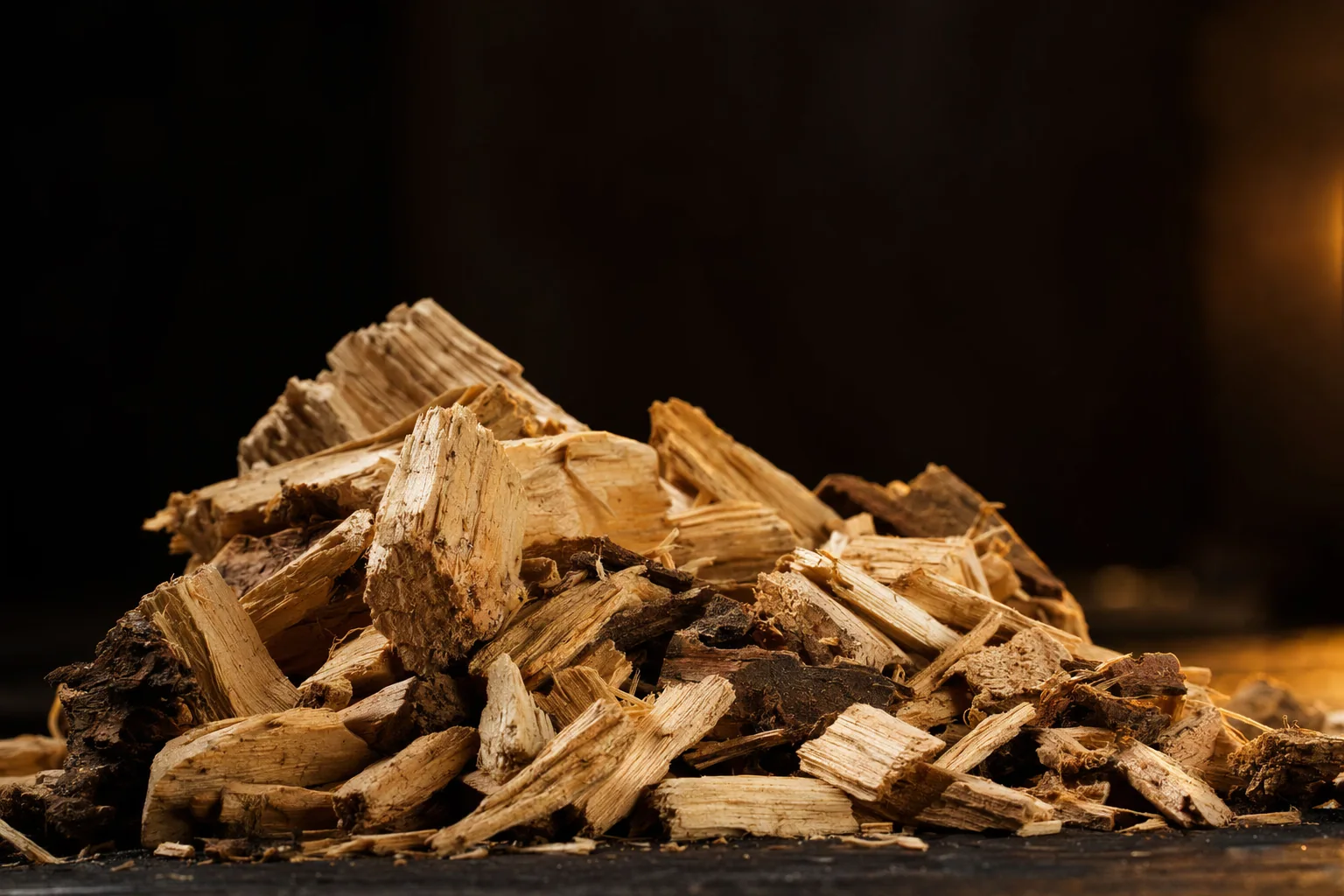
Fuel-grade versus pulp-grade purchasing criteria
Fuel buyers usually prioritise moisture, ash, size distribution and feeding compatibility. Pulp-grade buyers may prioritise species, cleanliness and fibre criteria that differ from boiler fuel.
State end use first so the discussion does not mix incompatible requirements. This article does not assert that EJI supplies pulp-grade chips or every species.
Ask whether the material is untreated wood relevant to your plant limits.
Size distribution, slivers and fines
Describe size as a distribution, not only one millimetre number. Oversized pieces and long slivers can jam feeders; excess fines change airflow.
ISO 17225-4 is a graded wood-chip standard family whose public abstract covers virgin wood, processing residues and chemically untreated used wood prepared with sharp tools—not hog fuel. Do not treat unseen class thresholds as copied numbers here, and do not claim EJI compliance.
Final availability and specifications are confirmed per inquiry.
Wet-basis moisture and energy
UK Forest Research guidance notes freshly harvested green wood often around 50–60% moisture on a wet basis, while many wood-chip boilers are discussed around 30–35% moisture fuel—context for UK guidance, not a verified Indonesian stock specification or universal OEM limit.
Higher moisture lowers usable energy per delivered tonne and changes handling. Some equipment is designed for higher moisture; driest is not always correct for every boiler.
Always state the moisture basis when comparing offers.
Ash, contamination and industrial uses
Ash and contaminants depend on bark, soil and feedstock cleanliness. Do not portray mixed waste wood as automatically safe fuel.
General industrial uses include biomass boilers and industrial heating where equipment allows. Confirm with plant documentation.
Use a parameter worksheet: size distribution, moisture basis, ash, contaminants, species/source notes, sampling method and acceptance checks.
Frequently asked questions
Is this a duplicate of the boiler intro article?
No. That intro stays intact. This page goes deeper on specification categories and purchasing criteria.
Do you publish ISO class thresholds here?
No. Confirm current values in the official standard text or with your laboratory.
Are green-wood moisture figures Indonesian stock specs?
No. Cited Forest Research ranges are contextual UK guidance at stated conditions.
How do I inquire?
Use Contact with end use, size, moisture targets, volume and destination.
Sources
ISO 17225-4:2021 public abstract
Related articles
Need help framing a chip specification sheet?
Share boiler limits and destination when you contact us.